
Supply-Side Ethics (S-SE)
“Now is no time to think of what you do not have. Think of what you can do with what there is.”— Ernest Hemingway, The Old Man and the Sea
What is Supply-Side Ethics?
Supply-Side Ethics (S-SE) is a way of approaching life, work, and problem-solving with two guiding questions:
- What have I got?
- What can I do with it?
This contrasts sharply with Demand-Side Ethics (DSE), which asks:
- What do I want?
- How can I get it?
S-SE begins with available resources, current constraints, and immediate possibilities, focusing on agency and creativity, rather than lack or desire.
Why S-SE?
The Problem with Demand-Side Ethics (DSE)
- DSE encourages chasing idealized outcomes: “I want to write a bestselling novel,” or “I want to make a million dollars.”
- These are outcome goals—distant, desire-driven, and less actionable.
The Power of Output Goals
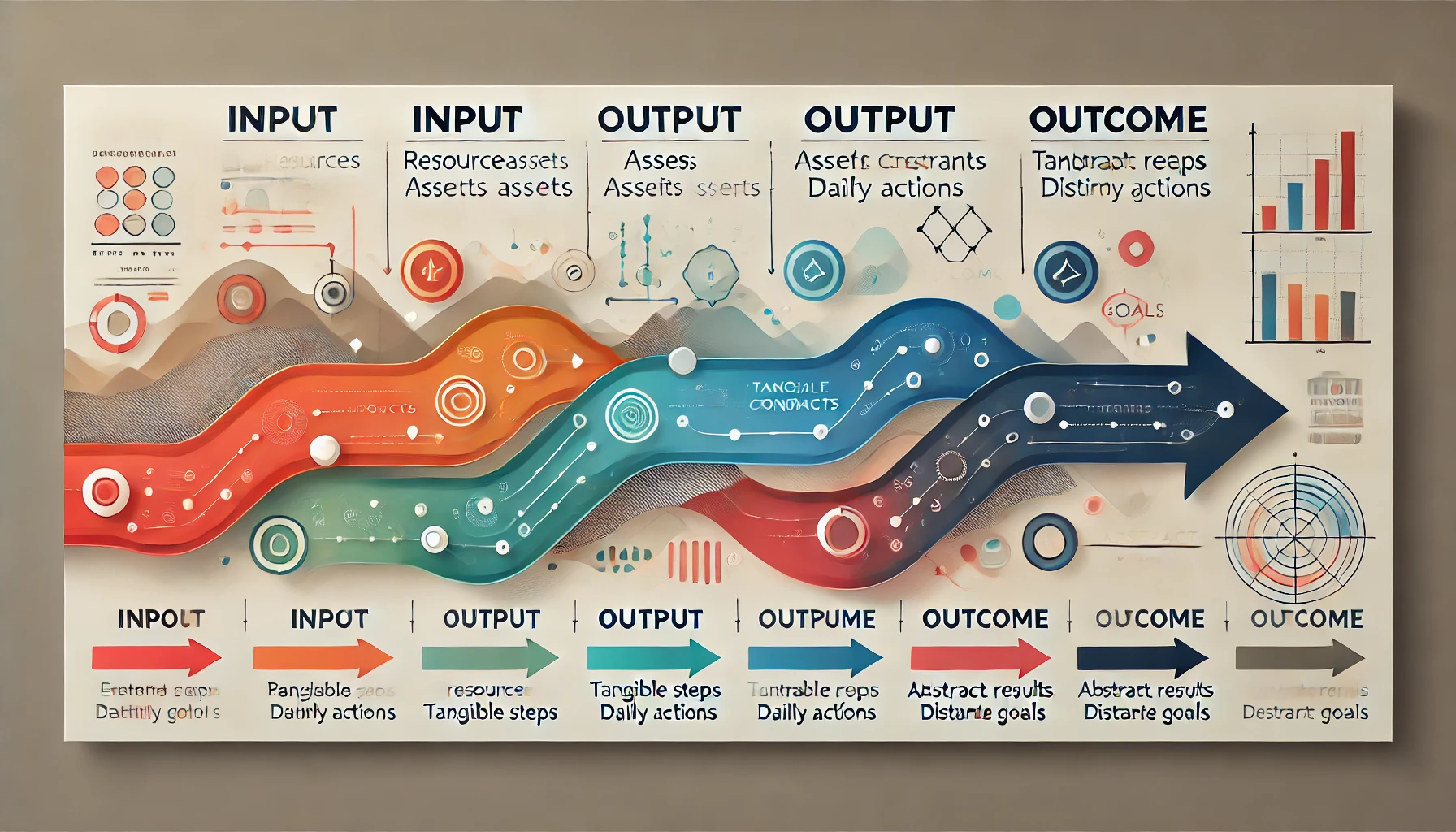
S-SE emphasizes output goals—concrete, repeatable actions within your control:
- Write 500 words today.
- Do 25 push-ups.
- Make 3 sales calls.
Output goals focus on effort and resourcefulness over wishful thinking.
S-SE Across Different Contexts
🛠️ Entrepreneurship: Effectuation Theory
- Start with your current resources: skills, networks, knowledge.
- Effectuation’s Bird in Hand Principle echoes S-SE: Focus on what’s controllable, not hypothetical outcomes.
Example Prompt: What product or service can I build with my current network and skills?
📊 Management: Asset-Based Thinking
- An Asset-Based Approach asks: What strengths do we already possess?
- Focus on building from strengths rather than solving deficits.
Example Prompt: What underutilized strengths does our team have right now?
🩺 Health & Wellness: Salutogenesis
- Focus on building from health assets, rather than fixing deficits.
- Ask: What health-supporting resources do I already have?
Example Prompt: What small action can I take today to improve my health?
💡 Self-Improvement: Resilience & Adaptability
- What can I make progress on today, given my current circumstances?
- What resources do I have that I might be overlooking?
Practical Prompts for S-SE Thinking
For Individuals:
- What resources (time, skills, network, energy) do I have right now?
- What small output goal can I commit to today?
- What strengths am I bringing to today’s challenges?
For Teams:
- What existing strengths does our team have?
- What can we build or achieve with our current resources?
- Where are we focusing on deficits instead of assets?
For Career Decisions:
- Am I framing my career in terms of actionable output goals or distant outcome goals?
- What strengths or assets can I highlight in my professional journey?
Connections to Other Ideas
- : Self-governance and focusing on internal agency.
- Gainfully Misemployed: Thriving in unconventional professional spaces.
- Identities at Work: Exploring identity through actionable strengths.
A Final Thought
S-SE isn’t about ignoring ambition or long-term goals—it’s about starting from where you are, with what you have, right now.
See: